Main Lesson Blocks
Main Lessons are taught in focused 4–5 week blocks, with classes meeting five days a week.
Lessons are grounded in observation and experience, supported by guided exploration and discussion, and designed to foster clarity, understanding, and independent thinking.
Artistic work, drawing, writing, movement, and discussion are integral to the learning process, supporting both intellectual development and inner confidence.
Class Structure
-
Live, interactive online classes
-
Small groups to support depth and participation
-
Classes held Monday to Friday
-
Monday–Thursday: Main Lesson teaching
-
Friday: discussion, review, projects, presentations, or assessments
-
Group timings are formed based on enquiries, allowing schedules to be shaped thoughtfully and responsively.
Explore Main Lesson Blocks by Grades:
Grade 4 Main Lesson Blocks


Describe your image

Maths
Grade 4 Mathematics strengthens firm, reliable thinking through well-structured number work and fractions. Learning is concrete, visual, and rhythmical, supporting accuracy, confidence, and independence as children cross an important developmental threshold.

Describe your image

Describe your image

Describe your image
Describe your image
Man & Animal
Around the age of nine, children begin to see themselves as separate from the world. In this block, we explore the human being as a balance of thinking, feeling, and willing, and compare this with animals that show these qualities in specialised ways. Through stories and observation, children develop a deeper understanding of themselves and a connection with the animal world.
Grade 5 Main Lesson Blocks


Describe your image
Ancient Civilizations
Grade 5 meets a time of balance and harmony in the child’s development. Through the study of ancient civilizations, students encounter humanity’s early relationship with land, law, beauty, and thought, fostering reverence, clarity, and a widening view of the world.

Describe your image


Describe your image
Describe your image
Maths - Decimals
At this age, children experience numbers as fluid and interconnected.
Work with decimals builds on whole numbers and fractions, strengthening precision, confidence, and a clear sense of numerical relationship through meaningful practice.

Describe your image

Describe your image
Describe your image
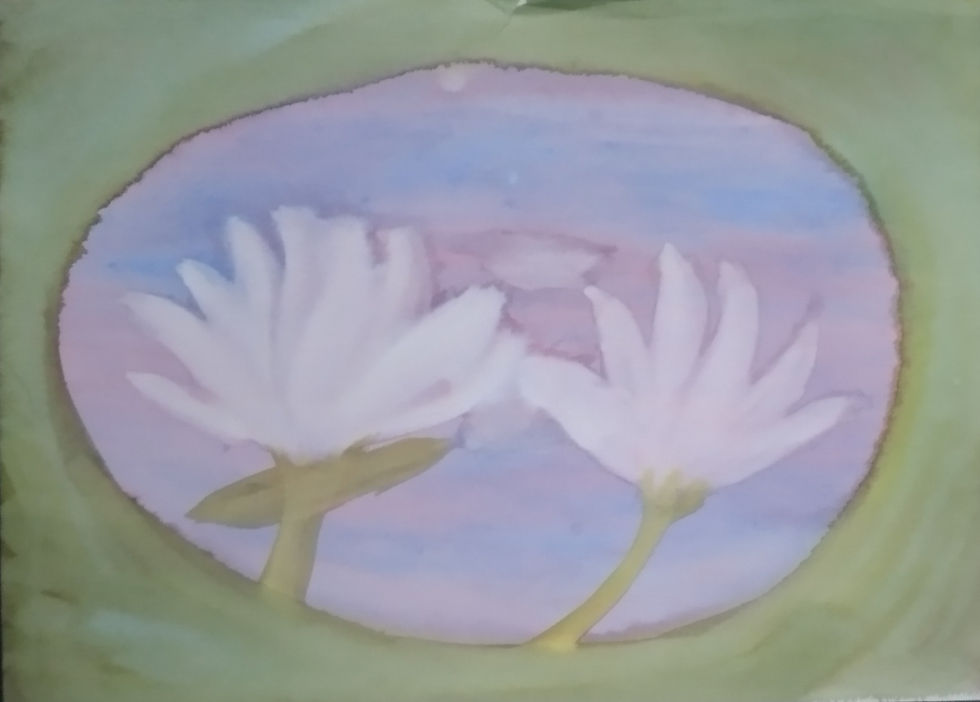
Botany - Plant Study
In Grade 5, children stand in a natural harmony with the living world. The study of plants meets this balanced stage through careful observation of growth, form, and environment, nurturing quiet attentiveness and reverence for nature.

Describe your image


Describe your image
Describe your image
Freehand Geometry
Freehand geometry cultivates balance, beauty, and exactness through movement and careful observation. Without instruments, students develop spatial awareness, coordination, and a feeling for form and proportion.
Grade 6 Main Lesson Blocks

Describe your image

Describe your image

Describe your image
Maths
In Grade 6, Mathematics turns outward toward the practical world. Through the study of percentages, business math, and simple interest, students learn to work confidently with money, pricing, and everyday financial situations.
This block strengthens clarity, accuracy, and independent thinking, helping students see mathematics as a reliable tool for real life.


Describe your image

Describe your image
Physics
In Grade 6, Physics is introduced through direct observation and experiment. Students explore fundamental phenomena such as heat, light, magnetism, acoustics and static electricity, building understanding from experience rather than abstraction.
Through careful experimentation and description, students develop clear thinking, attentiveness, and respect for natural law.

Describe your image


Describe your image
Geometry
In Grade 6, students meet Geometry with greater precision and logical clarity. Using instruments, they construct forms with accuracy, exploring relationships between lines, angles, circles, and polygons.
Through careful constructions and geometric reasoning, students develop exactness, perseverance, and clear mathematical thinking.


Astronomy
In Grade 6, students lift their gaze to the wider cosmos and explore humanity’s relationship with the heavens. Through observation of the sun, moon, stars, and planetary movements, they develop orientation in space and time.
Astronomy at this stage nurtures perspective, wonder, and a growing capacity for objective thinking grounded in careful observation.
Grade 7 Main Lesson Blocks


Maths
In Grade 7, students deepen their capacity to perceive relationship, balance, and proportion through the study of ratios. Building on concrete experience, they move toward increasingly abstract thinking, preparing the ground for directed numbers and introductory algebra.
The work strengthens logical clarity, practical reasoning, and confidence in handling real-world quantitative relationships.


Describe your image

Describe your image
Geometry
In Grade 7, students experience geometry as the study of form, transformation, and inner lawfulness. Through careful constructions and artistic precision, they strengthen exact thinking while awakening an appreciation for order and beauty in mathematical relationships.
The work supports the growing capacity for structured, independent reasoning.


Describe your image

Biology
In Grade 7, the child begins to experience a stronger inner life and a growing sense of individuality. The study of the human being meets this awakening consciousness by turning attention inward — toward the living systems that quietly sustain life.
Through the exploration of the threefold nature of the human being and the three body cavities, students encounter the digestive, circulatory, and respiratory systems not merely as mechanisms, but as dynamic processes working in harmony.
This study awakens wonder for the wisdom of the human body and fosters a deeper, more conscious relationship to health and balance.


Chemistry
In Grade 7, chemistry meets the adolescent’s awakening awareness of change, polarity, and transformation. Rather than beginning with abstract formulas, students first encounter substances through observable processes — burning, dissolving, separating, crystallising, and recombining.
Through careful experimentation and disciplined observation, they witness how matter transforms according to lawful patterns.
This phenomenological approach strengthens clear thinking while cultivating respect and wonder for the dynamic processes active in the material world.

Describe your image


Describe your image
Physics
In Grade 7, physics meets the student’s growing capacity for causal thinking and independent judgment. Natural phenomena are explored through direct experiment and careful observation, allowing laws to emerge from experience rather than abstraction.
Through the study of mechanics, optics, acoustics, and basic electricity, students discover order and relationship within the physical world. This strengthens clarity of thought while deepening respect for the lawful structure underlying everyday experience.


Astronomy
In Grade 7, students move from an Earth-centred view to the heliocentric understanding of the solar system. As their thinking becomes more independent and abstract, they explore the lawful movements of the planets and Earth’s place within a wider cosmic order.
Through the work of astronomers such as Galileo Galilei, Copernicus and Kepler, students encounter the courage and clarity required to shift humanity’s view of the universe and strengthens perspective, reasoning, and a sense of wonder for the cosmos.
Grade 8 Main Lesson Blocks


Describe your image
Maths and Geometry
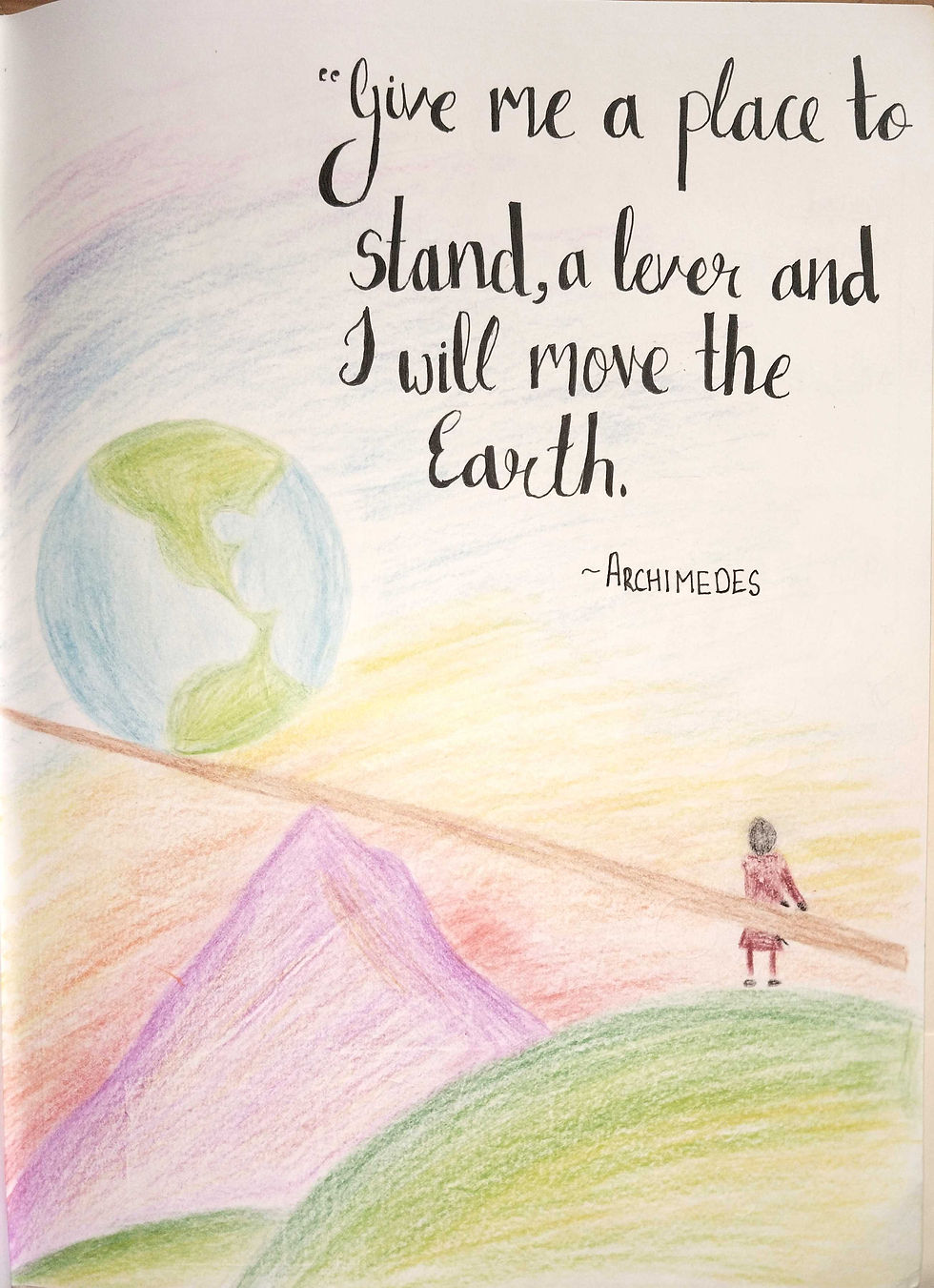
In Grade 8, mathematics reaches a new level of structure and clarity. Students are ready to think independently and engage with ideas in a more abstract and systematic way.
Through the study of solid geometry, number systems, loci, and algebra, students encounter mathematics as an interconnected and logical whole. The work strengthens precision, spatial thinking, and disciplined reasoning, while revealing the underlying order and beauty within mathematical relationships.

Describe your image

Physics
In Grade 8, physics becomes more precise and analytical, meeting the student’s growing capacity for causal thinking. Through carefully structured experiments, students observe, describe, and derive the lawful principles underlying physical phenomena.
The study of optics, electromagnetism, and pressure strengthens disciplined reasoning while deepening respect for the order inherent in the physical world.

Organic Chemistry
Building on the Grade 7 study of the digestive system, students now look more closely at the substances that nourish and sustain life. This block introduces organic chemistry through familiar materials found in everyday foods — such as carbohydrates, fats, proteins, and alcohols — revealing the connection between chemistry, nutrition, and the living body.
Through observation and carefully guided experiments, often drawn from everyday “kitchen chemistry,” students witness how these substances transform through natural processes. In doing so, they strengthen clear scientific thinking while gaining a deeper appreciation of nourishment and the living relationship between chemistry, nature, and the human being.

Describe your image

Describe your image
Biology
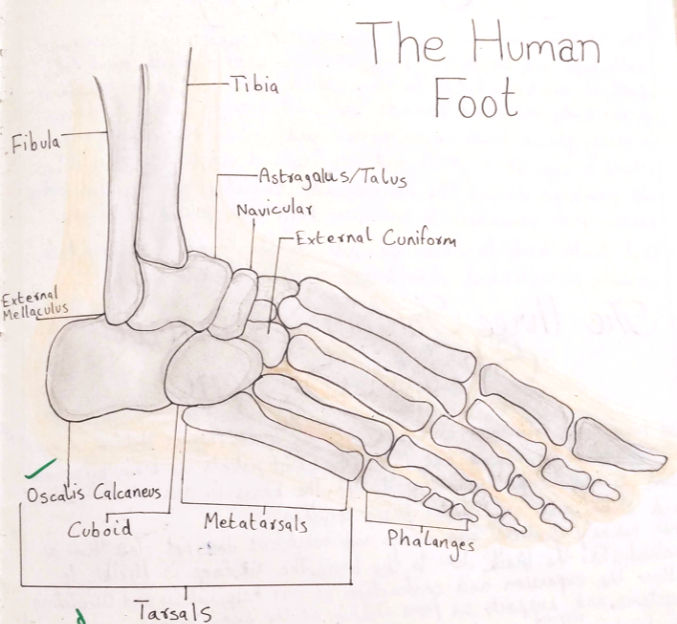
At this stage of adolescence, students begin to look more closely at their own bodies and the remarkable systems that support life, movement, and perception. The study of human biology meets this growing curiosity through an exploration of the body’s structure and coordination — including the bones and muscles that give form and movement, and the nervous system that connects the body with the senses.
Through observation, discussion, and clear scientific study, students gain a deeper understanding of how the human body works as an integrated whole, strengthening both their scientific thinking and their awareness of the living human being.
Grade 9 Main Lesson Blocks
Coming Soon
